7 Days in Japan: A First-Timer's Itinerary for Tokyo, Hakone and Kyoto
A realistic one-week route with only two hotel changes: what to see each day, how to move between cities, what to book ahead, and whether a JR Pass is worth it.
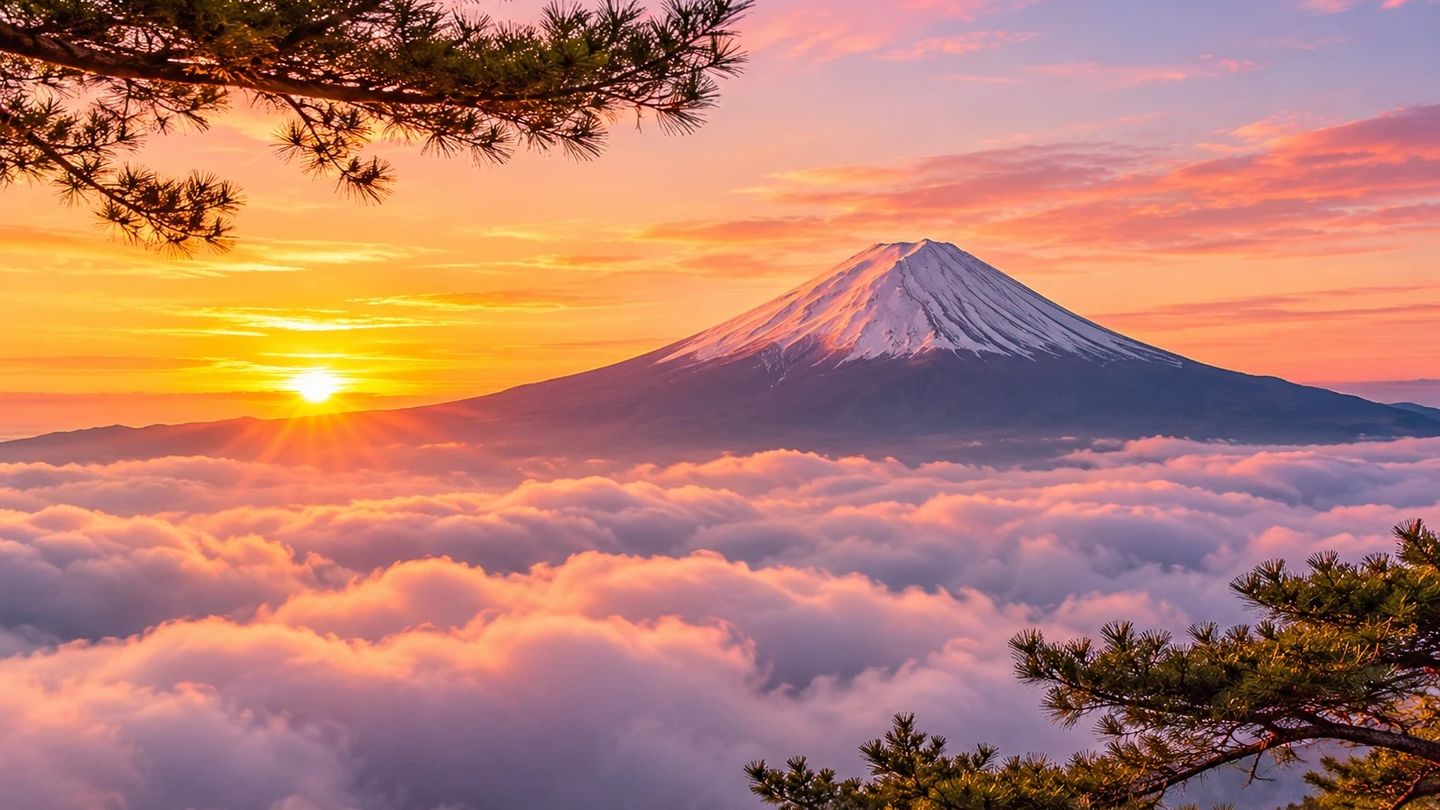
AI-generated image
At a glance
- Trip length
- 7 days, 6 nights
- Route
- Tokyo → Hakone → Kyoto
- Hotel changes
- Two
- Best time
- Late Mar–May, mid-Oct–early Dec
- Pace
- Moderate: one area per day
- JR Pass?
- Usually not worth it for this route
In this guide
The short answer
The best 7-day Japan itinerary for a first visit is 3 nights in Tokyo, 1 night in Hakone and 3 nights in Kyoto. Travel by Shinkansen (bullet train), use a rechargeable IC card for local transport, and send big suitcases ahead by courier. For this route, individual train tickets are usually cheaper than a JR Pass.
Most first-time Japan itineraries fail in the same way: too many cities, too many hotel changes, and evenings spent on trains instead of in izakayas. This plan does the opposite. You’ll have three bases, two transfers, and enough slack to wander, which is when Japan tends to be at its best.
It’s written for travellers who want the classics (Tokyo neighbourhoods, a Mount Fuji view, a night in a hot-spring inn, Kyoto temples) at a moderate pace. It assumes you arrive in Tokyo and fly home from Osaka’s Kansai Airport (KIX), but it works in reverse too.
The route at a glance
| Days | Base | Highlights | Getting there |
|---|---|---|---|
| 1–3 | Tokyo | Shibuya, Harajuku, Asakusa, Yanaka, food halls | Arrive at Narita or Haneda |
| 4 | Hakone | Mountain railway, ropeway, Lake Ashi, onsen | Shinkansen to Odawara (about 35 min) |
| 5–7 | Kyoto | Higashiyama, Gion, Fushimi Inari, Arashiyama | Shinkansen from Odawara (about 2 hours) |
Days 1–3: Tokyo
Tokyo is less a single city than a cluster of very different neighbourhoods. Choose a base on or near the JR Yamanote Line loop and you can reach almost everything in this plan in under 30 minutes. Shinjuku is the most convenient; Asakusa or Ueno are calmer and often cheaper.
Day 1: Arrive and adjust
Don’t schedule much. After a long-haul flight, aim for an early dinner near your hotel, such as a ramen counter, a conveyor-belt sushi spot or a depachika (department store food hall), and an early night. Jet lag usually means you’ll wake at dawn, which is perfect for day 2.
Day 2: Shrines, fashion and the famous crossing
- Early morning: Walk the forested approach to Meiji Jingu, a Shinto shrine that’s at its most peaceful before 8 a.m.
- Late morning: Browse Harajuku and the quieter, design-led backstreets of Omotesando.
- Afternoon: Watch Shibuya Crossing from street level, then from above if you’ve booked a time slot at an observation deck.
- Evening: Eat in the tiny bars of Omoide Yokocho or Shinjuku’s Golden Gai.
Day 3: Old Tokyo
- Morning: Senso-ji temple in Asakusa. Go before 8 a.m. to see it without the crowds.
- Midday: Walk to Yanaka, one of the few areas that kept its older wooden streets, for small shops and cafés.
- Afternoon: Choose one: Ueno Park museums, a teamLab digital art exhibition (book ahead), or shopping in Ginza.
Before you leave Tokyo: send your large luggage to your Kyoto hotel by courier (called takkyubin). Hotel front desks arrange it. It usually arrives the next day (allow two days to be safe) and means you’ll travel to Hakone with just an overnight bag.
Day 4: Hakone, Mount Fuji views and a hot-spring night
Take the Shinkansen from Tokyo or Shinagawa to Odawara (about 35 minutes on a Kodama or Hikari service), then switch to local transport. The classic Hakone loop links several types of transport and is a sightseeing trip in itself:
- Hakone Tozan Railway zigzags up the mountain to Gora.
- A cable car climbs to Sounzan.
- The Hakone Ropeway passes over Owakudani, a steaming volcanic valley, with Fuji views on clear days.
- A sightseeing boat crosses Lake Ashi to Moto-Hakone, near the lakeside torii gate of Hakone Shrine.
The Hakone Freepass covers all of this plus local buses. From Odawara, a 2-day adult pass costs ¥6,000 (as of late 2026), which is good value if you do the full loop.
Spend the night in a ryokan, a traditional inn where dinner and breakfast are usually included and you bathe in natural hot-spring water. It’s the most expensive night of the trip, and for most people it’s the one they remember.
Good to know: The ropeway sometimes closes because of volcanic gas levels. Check the operator’s status page on the day; buses provide an alternative route.
Days 5–7: Kyoto
Return to Odawara and take a Hikari Shinkansen to Kyoto (about 2 hours). Stay near Kyoto Station for convenience, or around Shijo/Kawaramachi to be within walking distance of Gion and the evening food scene.
Day 5: Arrive and walk Gion
Check in, then spend the late afternoon walking through Gion and along Shirakawa canal. As the lanterns light up, this is the Kyoto most people imagine. Be respectful: photographing geiko and maiko in private lanes is now restricted in parts of Gion.
Day 6: Higashiyama on foot
Start early at Kiyomizu-dera, then walk downhill through the preserved lanes of Sannenzaka and Ninenzaka, past Yasaka Pagoda, to Kodai-ji and Maruyama Park. It’s one of the best walks in Japan. Just be there before 9 a.m., because by late morning these narrow streets are packed.
Day 7: Fushimi Inari or Arashiyama
You likely only have time for one before heading to the airport:
- Fushimi Inari Taisha: thousands of vermilion torii gates winding up a forested mountain. It’s open 24 hours and free. Go at sunrise and climb past the first viewpoint to lose most of the crowds.
- Arashiyama: the bamboo grove (also best at dawn), Tenryu-ji garden and the riverside. More varied, but busier.
From Kyoto Station, the Haruka limited express reaches Kansai Airport in about 75–80 minutes.
Is a Japan Rail Pass worth it for this itinerary?
For this route, probably not. The 7-day ordinary JR Pass costs ¥50,000; JR has announced that passes sold by overseas agents rise to ¥53,000 from October 2026. Compare that with the main journeys you’ll actually take:
| Journey | Approximate cost (2026, one way) |
|---|---|
| Tokyo → Odawara (Shinkansen) | A few thousand yen |
| Odawara → Kyoto (Shinkansen) | Most of a Tokyo–Kyoto fare |
| Tokyo → Kyoto direct, Nozomi, reserved seat (for comparison) | About ¥14,000–¥14,500 |
| Kyoto → Kansai Airport (Haruka) | A few thousand yen |
Even with the Hakone Freepass on top, your long-distance transport typically comes to well under half the price of the pass. A JR Pass makes sense only if you add long journeys, for example a day trip to Hiroshima, or a return to Tokyo at the end. Note too that the pass doesn’t cover the fastest Nozomi trains without a supplement ticket (¥4,960 Tokyo–Kyoto), bought in Japan.
Fares change: check current prices on the official Japan Rail Pass site or JR Central’s website before deciding.
Practical planning
Getting around cities
Load a rechargeable IC card such as Suica, PASMO or ICOCA (or add one to your phone’s wallet) and tap in and out of trains, subways and buses. The same cards work in Tokyo and Kyoto and can pay at convenience stores too.
Money
Card payments are widely accepted in cities, but carry some cash for small restaurants, temples, shrines and rural Hakone. 7-Eleven and post office ATMs reliably accept foreign cards.
Connectivity
An eSIM is the simplest option if your phone supports it. Download offline maps before you go; navigating the larger stations is much easier with step-by-step directions.
Entry essentials
- Citizens of the US, UK, Canada and Australia can currently visit visa-free for up to 90 days. Confirm on Japan’s Ministry of Foreign Affairs site.
- Complete Visit Japan Web before you fly to generate QR codes for immigration and customs. It speeds up arrival.
- Japan’s departure tax rose to ¥3,000 from July 2026. It’s normally included in your airline ticket.
What to book and when
| Book | When |
|---|---|
| Hotels and your Hakone ryokan | As soon as dates are fixed; ryokan with private baths sell out first |
| Time-slot attractions (teamLab, Ghibli Museum, observation decks) | Typically when tickets release, often one to two months ahead |
| Popular sushi, kaiseki or tasting-menu restaurants | One to two months ahead |
| Shinkansen seats | A few days ahead normally; as early as possible in late March–early April, Golden Week (late April–early May), mid-August and New Year |
When to go
- Spring (late March–April): Cherry blossom season. Beautiful, but the busiest and most expensive time, so book months ahead.
- Autumn (mid-November–early December in Kyoto): Autumn leaves, comfortable temperatures, also very busy.
- Winter (December–February): Cold but often clear, with the best odds of seeing Mount Fuji. Fewer crowds outside the New Year holiday.
- Summer (June–August): The rainy season in June is followed by hot, humid weather. Fine if you plan early starts and indoor afternoons.
How to adapt this plan
- Only 5 days? Cut Hakone and do 3 nights in Tokyo, 2 in Kyoto.
- 10 days? Add Nara as a day trip from Kyoto, then 2 nights in Osaka for street food before flying home from KIX.
- Travelling with kids? Swap one temple morning for the Kyoto Railway Museum or a Tokyo theme park, and keep afternoons short.
Japan rewards curiosity. If this trip leaves you wanting more, our bucket-list guide includes Kyoto in autumn and other places worth planning a whole trip around. You can also browse every RestMania guide to Japan.
Frequently asked questions
Is 7 days enough for Japan?
Yes, for a first trip that focuses on Tokyo and Kyoto with one night in Hakone. Seven days lets you see the highlights at a comfortable pace. Add three or more days if you also want Osaka, Nara day trips, Hiroshima or the Japanese Alps.
Is the Japan Rail Pass worth it for a 7-day Tokyo–Kyoto trip?
Usually not. A 7-day ordinary JR Pass costs ¥50,000 (rising to ¥53,000 from overseas agents from October 2026), while one-way Tokyo–Kyoto by Nozomi is about ¥14,000–¥14,500. Unless you add a long return journey or extra long-distance trips, individual tickets are cheaper.
Should I stay in Hakone overnight or visit as a day trip?
Stay overnight if you can. The Hakone loop takes most of a day, Fuji views are most reliable early in the morning, and a night in a ryokan with an onsen (hot spring bath) is one of the most memorable experiences of a first trip.
What should I book before going to Japan?
Book hotels first, then any time-slot attractions you care about (such as teamLab, the Ghibli Museum or Shibuya Sky), popular restaurants, and a ryokan in Hakone. In peak seasons, reserve Shinkansen seats as soon as your dates are fixed.
Do I need a visa to visit Japan?
Citizens of the US, UK, Canada and Australia can currently visit Japan visa-free for short tourist stays of up to 90 days. Rules can change, so confirm on Japan's Ministry of Foreign Affairs website before you travel.