Switzerland for First-Timers: Where to Stay, Which Pass to Buy and What It Really Costs
A clear first-time guide to Switzerland: the best bases, a 7-day route, whether the Swiss Travel Pass is worth it in 2026, and how to enjoy one of the world's priciest countries without overspending.
AI-generated image
At a glance
- Ideal first trip
- 7 days, 3 bases
- Classic route
- Lucerne → Interlaken → Zermatt
- Swiss Travel Pass (2026)
- From CHF 254 (3 days, 2nd class)
- Half Fare Card
- About CHF 150 for one month
- Currency
- Swiss franc (CHF), not the euro
- Best months
- June–September; December–March for snow
In this guide
The short answer
For a first trip, spend 7 days split between Lucerne, the Interlaken/Jungfrau region and Zermatt, and travel by train. The Swiss Travel Pass (from CHF 254 for 3 days in 2nd class in 2026) suits fast-moving trips; the Half Fare Card (about CHF 150) often wins for slower ones. Switzerland is expensive, but supermarkets, picnics and free lake swimming help a lot.
Switzerland can feel overwhelming to plan. There are four national languages, dozens of mountain railways and a confusing range of rail passes. And everything seems to cost more than you expect.
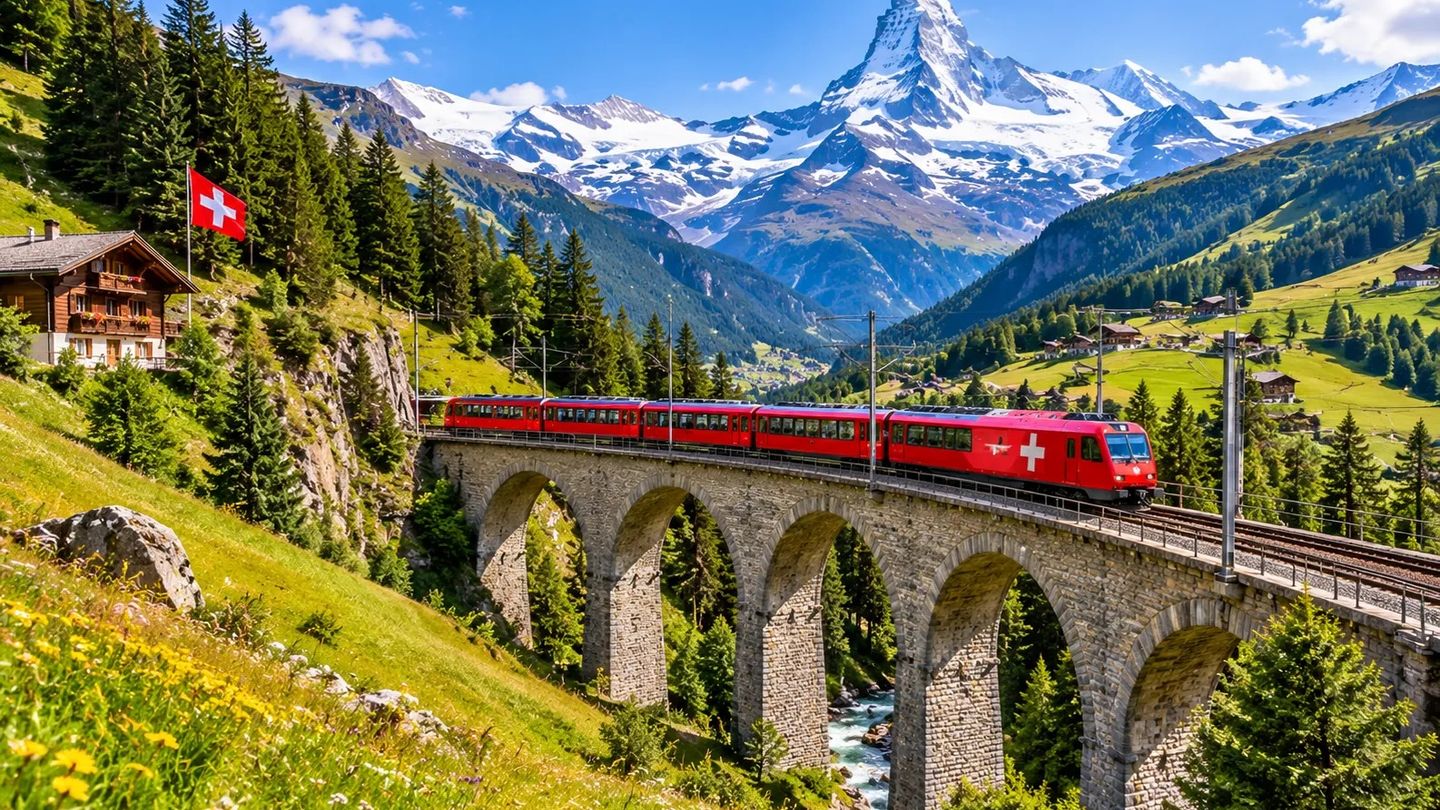
The good news: it’s one of the easiest countries in the world to travel around. Trains run like clockwork, lake boats are part of the public transport network, and the scenery from an ordinary regional train is better than most sightseeing tours elsewhere.
This guide assumes a first visit of about a week, travelling by public transport at a moderate pace, with prices as of late 2026.
The essentials
- Currency: Swiss franc (CHF). Switzerland isn’t in the EU; cards are accepted almost everywhere.
- Entry: Switzerland is in the Schengen Area, so Schengen rules apply, including the EU’s Entry/Exit System at external borders.
- Languages: German, French, Italian and Romansh. English is widely spoken in tourist areas.
- Plugs: Type J sockets. Two-pin European plugs usually fit, but bring an adapter for UK, US or Australian plugs.
- Water: Tap water and the public fountains in towns are safe and free to drink.
- Sundays: Most shops close; station and airport supermarkets stay open.
Where to stay: the best bases for first-timers
Lucerne: the easy all-rounder
A compact old town on a lake, with the famous covered Chapel Bridge, lake cruises and easy trips up Mount Rigi, Mount Pilatus or Stoos. Great for your first nights, with excellent rail connections from Zurich airport.
Interlaken, Lauterbrunnen or Grindelwald: the Alpine heart
The Jungfrau region is classic Switzerland: waterfalls, cogwheel trains, chalet villages and the peaks of the Eiger, Mönch and Jungfrau.
- Interlaken is the most convenient and has the most accommodation.
- Lauterbrunnen sits in a dramatic valley of waterfalls.
- Grindelwald and car-free Wengen or Mürren feel more alpine, with mountain views from your window.
Zermatt: for the Matterhorn
A car-free mountain village beneath the Matterhorn. It’s expensive but unforgettable, especially at sunrise when the peak glows pink.
Also consider
- Montreux and Lake Geneva: vineyards, lakeside promenades and Château de Chillon.
- Lugano: Italian-speaking, palm-lined lakes and a Mediterranean feel.
A 7-day first-timer’s itinerary
| Day | Plan | Overnight |
|---|---|---|
| 1 | Arrive in Zurich, train to Lucerne (about 1 hour), old town and lakefront | Lucerne |
| 2 | Lake cruise and mountain excursion (Rigi or Pilatus) | Lucerne |
| 3 | Scenic train to Interlaken via the Brünig Pass; evening in Lauterbrunnen | Jungfrau region |
| 4 | Mountain day: Jungfraujoch, Schilthorn or First, depending on budget and weather | Jungfrau region |
| 5 | Valley hike or Lake Brienz; optional paragliding | Jungfrau region |
| 6 | Train to Zermatt; Gornergrat railway for Matterhorn views | Zermatt |
| 7 | Sunrise Matterhorn views, then train to Zurich or Geneva for your flight | Home |
Pace: One major excursion per day, with travel days kept short. Always keep a flexible “bad weather” day; mountain views can disappear in cloud.
Swiss Travel Pass vs Half Fare Card
This is the most common first-timer question, and the answer depends on how much you’ll travel.
Budget estimate: Swiss francs (CHF), adult prices for 2026
Includes: travel on Switzerland's trains, buses and lake boats as described below. Prices from SBB and the Swiss Travel System.
| Category | Amount |
|---|---|
| Swiss Travel Pass, 3 consecutive days (2nd class) | CHF 254 |
| Swiss Travel Pass, 4 consecutive days (2nd class) | CHF 309 |
| Swiss Travel Pass, 8 consecutive days (2nd class) | CHF 439 |
| Swiss Travel Pass Flex, 3 days in 1 month (2nd class) | CHF 289 |
| Half Fare Card, 1 month | about CHF 150 |
Prices change. Check the official SBB or Swiss Travel System website before you buy. First-class passes cost considerably more.
The Swiss Travel Pass
Gives unlimited travel on most trains, buses and lake boats, plus public transport in many towns, free entry to many museums, and free or discounted travel on selected mountain railways. Some, such as Mount Rigi, are included; others, such as the Jungfraujoch, are discounted rather than free.
Best for: travellers who move often, take long journeys and will use boats and mountain trips.
The Half Fare Card
Gives 50% off most train, bus, boat and many mountain railway tickets for a month.
Best for: slower trips with fewer long journeys. Because the big mountain excursions are discounted by up to half, it can beat the Travel Pass for a 7-day trip with three bases.
How to decide: list every journey and excursion, look up the full fares on the SBB app and add them up. Then compare two numbers:
- With the Half Fare Card: CHF 150 plus half of your full-fare total (or slightly more for excursions that are discounted less than 50%).
- With the Swiss Travel Pass: the pass price, plus the discounted price of any mountain railways it doesn’t fully cover.
Whichever is lower is your answer. Fast-paced trips with long daily journeys usually favour the Travel Pass; slower trips usually favour the Half Fare Card.
What Switzerland really costs
Switzerland is one of the world’s most expensive countries, but you can control costs.
- Accommodation: the biggest cost. Mountain villages and Zermatt are priciest; Interlaken and Lucerne have more choice.
- Eating out: expect restaurant main courses to cost far more than in neighbouring countries. Lunch menus (menu du jour, Tagesmenü) are better value than dinner.
- Mountain excursions: often the biggest single expense, especially the Jungfraujoch. Choose one or two high peaks and enjoy cheaper viewpoints the rest of the time.
How to save money
- Shop at Coop and Migros supermarkets and picnic by the lake.
- Drink from public fountains instead of buying water.
- Swim in lakes for free. Many have public bathing areas in summer.
- Book Supersaver tickets on the SBB app for long journeys if you’re not using a pass.
- Hike. Some of the best views in Switzerland are free.
When to go
- June–September: best for hiking, lakes and mountain railways. Busiest and most expensive.
- May and October: fewer crowds and lower prices, but some high-altitude lifts and trails close for maintenance.
- December–March: ski season and Christmas markets; mountain villages look magical, but some summer routes are closed.
Planning a bigger Alpine trip? The Dolomites are just across the border in Italy. See our guide to Italy’s most beautiful places. For more trip-planning, browse our travel guides and packing checklist.
Frequently asked questions
How many days do you need in Switzerland?
Seven days is ideal for a first visit, with three bases such as Lucerne, the Interlaken/Jungfrau region and Zermatt. With five days, choose two bases; with ten, add Lake Geneva or the Italian-speaking south around Lugano.
Is the Swiss Travel Pass worth it?
It's usually worth it if you take a long train journey most days and plan to use boats, city transport and the mountain railways it includes or discounts. For slower trips with fewer, shorter journeys, the Half Fare Card (about CHF 150 for a month) is often cheaper. Add up your planned journeys before deciding.
Is Switzerland in the EU?
No. Switzerland is not in the European Union and uses the Swiss franc, but it is part of the Schengen Area, so Schengen entry rules apply. Euros are accepted in some places, but change is usually given in francs at a poor rate.
What is the best base for a first trip to Switzerland?
Lucerne is the easiest all-round base, with a beautiful old town, lake cruises and nearby mountains. The Interlaken area, including Lauterbrunnen and Grindelwald, is best for Alpine scenery and hiking. Zermatt is worth it for the Matterhorn.