Where to Stay in Paris for First-Time Visitors: The 7 Best Neighbourhoods
Le Marais, Saint-Germain, Montmartre or near the Eiffel Tower? A clear guide to Paris's best areas for a first trip, who each one suits, how to get around, and what to know before booking.
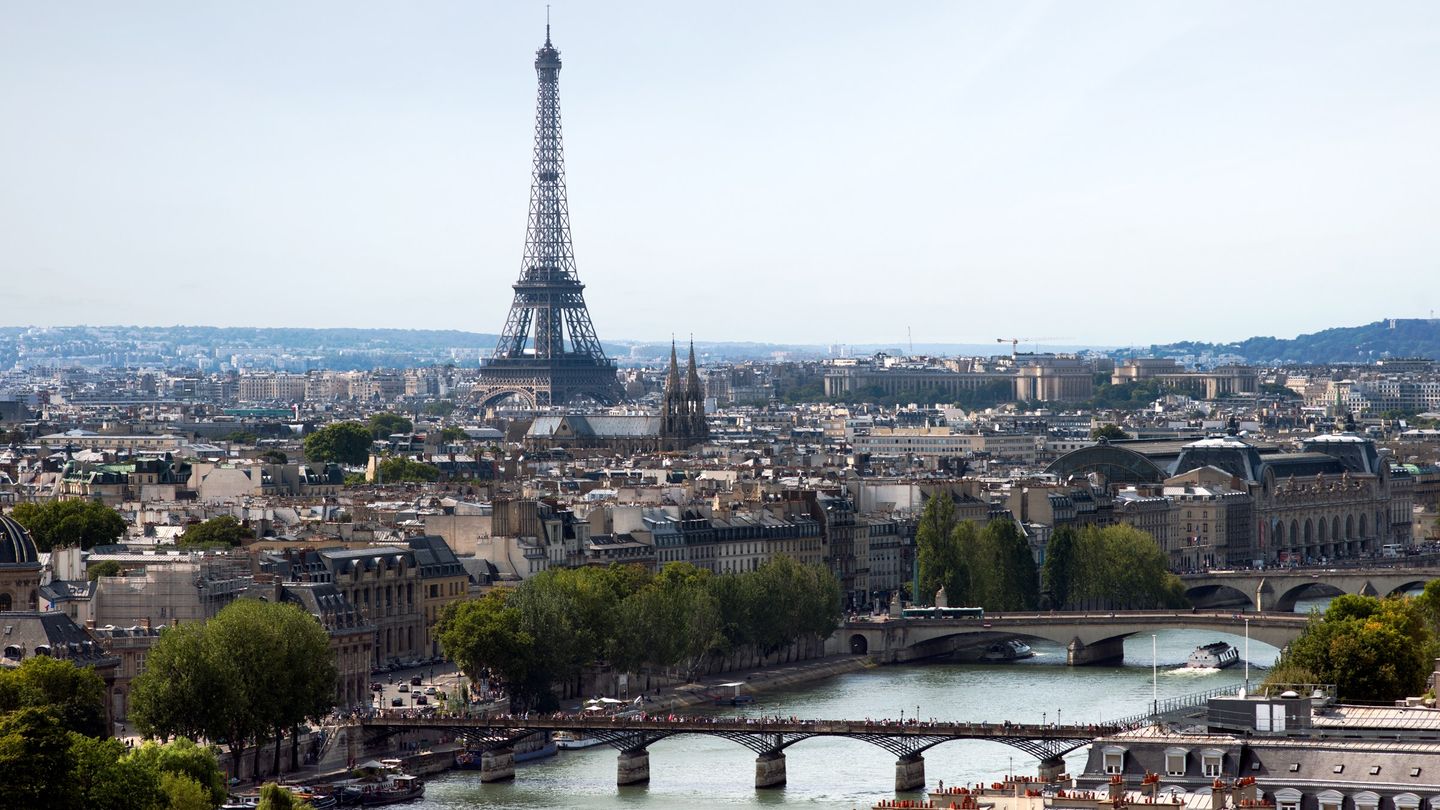
Photo: ThePromenader / Wikimedia Commons, CC BY-SA 3.0, cropped and resized
At a glance
- Best all-rounder
- Le Marais (3rd–4th)
- Most classic Paris
- Saint-Germain-des-Prés (6th)
- Best value
- Canal Saint-Martin (10th), Bastille (11th)
- Single metro ticket
- €2.55 (2026)
- Airport ticket
- €14 (CDG or Orly, 2026)
- Stay within
- A few minutes' walk of a metro station
In this guide
- 01 The 7 best neighbourhoods at a glance
- 02 1. Le Marais (3rd and 4th): best all-round base
- 03 2. Saint-Germain-des-Prés (6th): classic Left Bank Paris
- 04 3. Latin Quarter (5th): best value in the centre
- 05 4. Around the Louvre and Opéra (1st, 2nd and 9th): most convenient for sights
- 06 5. Near the Eiffel Tower (7th): views and calm
- 07 6. Montmartre (18th): village charm and views
- 08 7. Canal Saint-Martin and Bastille (10th and 11th): local Paris on a budget
- 09 Getting around Paris (2026 prices)
- 10 Booking tips
- 11 Frequently asked questions
The short answer
For a first trip, the best places to stay in Paris are Le Marais (3rd–4th arrondissements) for an all-round central base, Saint-Germain-des-Prés (6th) for classic Left Bank charm, and the Latin Quarter (5th) for good value close to the sights. Whichever you choose, stay within a few minutes’ walk of a metro station.
Paris is divided into 20 arrondissements (districts), spiralling out from the centre like a snail shell. Lower numbers are generally more central, but every district has its own character, and choosing the right one shapes your whole trip.
This guide compares seven areas that work especially well for first-time visitors, staying for three to five nights and getting around by metro and on foot. Prices and transport fares are as of late 2026.
The 7 best neighbourhoods at a glance
| Area | Arrondissement | Best for | Price level |
|---|---|---|---|
| Le Marais | 3rd–4th | All-rounders, food, nightlife | €€€ |
| Saint-Germain-des-Prés | 6th | Classic Paris, cafés, couples | €€€€ |
| Latin Quarter | 5th | Value, history, students’ Paris | €€ |
| Louvre and Opéra | 1st–2nd, 9th | Sightseeing, shopping, transport | €€€ |
| Eiffel Tower area | 7th | Views, families, quiet evenings | €€€€ |
| Montmartre | 18th | Village feel, romance, views | €€ |
| Canal Saint-Martin and Bastille | 10th–11th | Local life, bars, value | €€ |
Price levels are relative to other central Paris areas, from €€ (good value for Paris) to €€€€ (premium).
1. Le Marais (3rd and 4th): best all-round base
Medieval lanes, elegant squares such as Place des Vosges, independent boutiques, falafel on Rue des Rosiers and some of the city’s best bars. You can walk to Notre-Dame, the Seine and the Louvre.
- Good for: first-timers who want to walk everywhere and eat well.
- Consider: it’s lively on weekend evenings; ask for a room away from the street.
2. Saint-Germain-des-Prés (6th): classic Left Bank Paris
The Paris of famous cafés, bookshops, art galleries and the Luxembourg Gardens. Elegant and central, with the Seine and the Louvre a short walk away.
- Good for: couples, food lovers and anyone after a classic Parisian atmosphere.
- Consider: one of the most expensive areas for hotels.
3. Latin Quarter (5th): best value in the centre
Home to the Sorbonne, the Panthéon and lively, winding streets near the river. Hotels are often better value than in neighbouring Saint-Germain.
- Good for: budget-conscious travellers who still want to be central.
- Consider: the streets around Rue de la Huchette are touristy; look a few blocks further south.
4. Around the Louvre and Opéra (1st, 2nd and 9th): most convenient for sights
Stay among the grand boulevards, department stores and the Palais Garnier, with fast metro and RER connections across the city and to the airports.
- Good for: short trips focused on sightseeing and shopping.
- Consider: busy in the day and quieter at night; the 9th has a more local, residential feel.
5. Near the Eiffel Tower (7th): views and calm
Wide avenues, smart residential streets and the Rue Cler market street. Book a room with a view and you’ll see the tower sparkle on the hour after dark.
- Good for: families and travellers who prefer quiet evenings.
- Consider: fewer late-night restaurants, and you’ll use the metro more to reach other areas.
6. Montmartre (18th): village charm and views
Hilltop lanes, the Sacré-Cœur basilica, artists in Place du Tertre and views across the city. It feels like a village within Paris.
- Good for: romantic stays and repeat visitors who want character.
- Consider: it’s hilly, and the area around the foot of the hill near Pigalle is busier at night. Stay on the quieter upper slopes.
7. Canal Saint-Martin and Bastille (10th and 11th): local Paris on a budget
Tree-lined canals with iron footbridges, wine bars, bakeries and a young, local crowd. It’s one of the best areas for eating out at reasonable prices.
- Good for: return visitors, foodies and budget travellers.
- Consider: a little further from the main sights, but well connected by metro.
Getting around Paris (2026 prices)
| Ticket | Price |
|---|---|
| Single metro, RER or train ticket (anywhere in Paris) | €2.55 |
| Single bus or tram ticket | €2.05 |
| Airport ticket (CDG via RER B, or Orly) | €14 |
| Navigo Easy card (one-off cost) | about €2 |
| Navigo Semaine weekly pass (Mon–Sun, includes airports) | €32.40 |
Paper tickets have been phased out: load tickets onto a Navigo Easy card or the official app on your phone. Arriving on a Monday or Tuesday and staying all week? The weekly pass usually pays for itself, especially as it includes airport journeys. Check current fares on the RATP website.
Booking tips
- Check the nearest metro station and how many lines it serves before you book.
- Expect small rooms. Paris hotel rooms are often compact, especially in older buildings.
- Check for a lift. Many historic buildings have narrow stairs or tiny elevators.
- Remember the city tax (taxe de séjour), charged per person per night and added to most hotel bills.
- Book early for spring, September and major events, when prices rise sharply.
Paris in winter? It’s one of the cities in our best countries to visit in December. Before you fly, run through our international packing checklist. And for more European ideas, see Italy’s most beautiful places.
Frequently asked questions
What is the best area to stay in Paris for first-time visitors?
Le Marais (3rd and 4th arrondissements) is the best all-round area for most first-time visitors: central, walkable, full of restaurants and close to Notre-Dame, the Louvre and the Seine. Saint-Germain-des-Prés (6th) is a classic, elegant alternative on the Left Bank.
Which areas of Paris should I avoid staying in?
Rather than avoiding whole neighbourhoods, avoid staying far from a metro line, and be cautious about the immediate surroundings of the busiest railway stations, such as Gare du Nord, which can feel hectic late at night. Check recent reviews and the exact street before booking.
How much is the metro in Paris?
In 2026, a single metro, RER or train ticket in Paris costs €2.55, and a ticket to or from Charles de Gaulle or Orly airport costs €14. Tickets are loaded onto a Navigo Easy card or a smartphone. A weekly Navigo pass (€32.40, Monday to Sunday) includes airport journeys.
Is it better to stay on the Left Bank or the Right Bank?
Both are excellent. The Right Bank (Le Marais, around the Louvre, Montmartre) is livelier, with more shopping and nightlife. The Left Bank (Saint-Germain, the Latin Quarter, near the Eiffel Tower) is often quieter and more classically Parisian.