10 Cheapest Countries in Europe to Visit in 2027 (and Who Each One Suits)
Where your money goes furthest in Europe, from Albania's beaches to Georgia's wine country, with realistic daily budgets, best seasons and the hidden costs that catch travellers out.
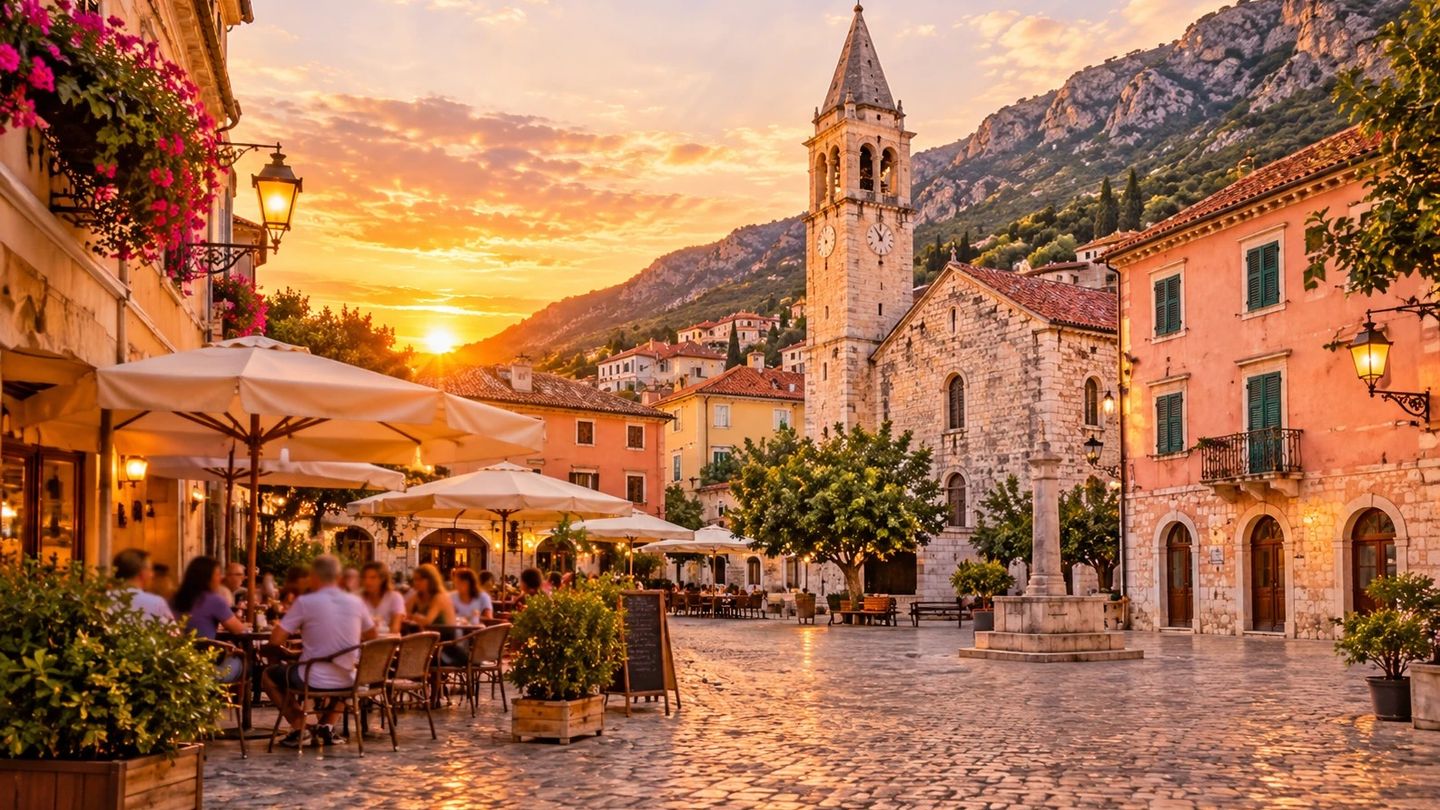
AI-generated image
At a glance
- Lowest daily costs
- North Macedonia, Georgia (€40–€70)
- Best budget beaches
- Albania
- Best city break
- Budapest, Kraków, Belgrade
- Best season
- Apr–early Jun, mid-Sep–Oct
- Biggest hidden cost
- Flights to smaller airports
In this guide
The short answer
The cheapest countries in Europe to visit are Albania, North Macedonia, Bosnia and Herzegovina, Serbia and Georgia, followed by Bulgaria, Romania, Poland, Hungary and Montenegro. In 2026, a solo mid-range traveller can expect to spend roughly €40–€85 a day in the Balkans and Georgia, and €60–€110 in Poland and Hungary. That’s often half what the same trip costs in France, Italy or the UK.
Europe doesn’t have to mean €200-a-night hotels and €15 glasses of wine. Head south-east and the continent changes character: Ottoman bazaars sit alongside Habsburg boulevards, mountain villages still bake their own bread, and the coastline is as beautiful as anything on the Riviera, at a fraction of the price.
But “cheap” is more complicated than a hostel price. Below, we compare ten affordable European countries by what a day actually costs, who each one suits and when to go, then cover the hidden costs that can quietly double a budget trip.
How we chose these countries
We ranked countries by the cost of a typical mid-range day for one person (a private room rather than a dorm, two meals out, local transport and one paid sight) rather than by the cheapest possible bed. We also considered how easy each place is to reach and travel around, because a bargain destination that takes two days and three buses to reach isn’t a bargain for most people.
What a day costs: quick comparison
Budget estimate: EUR, per person per day, shoulder season, 2026 estimates
Includes: private room in a mid-range guesthouse or 3-star hotel (half of a double), two meals out, local transport and one paid attraction
| Category | Amount |
|---|---|
| Albania | €45–€75 |
| North Macedonia | €40–€70 |
| Bosnia and Herzegovina | €45–€75 |
| Serbia | €50–€85 |
| Georgia | €40–€70 |
| Bulgaria | €50–€85 |
| Romania | €55–€90 |
| Poland | €60–€100 |
| Hungary | €70–€110 |
| Montenegro | €60–€100 |
RestMania estimates for comparison only. Costs vary with exchange rates, city versus countryside, events and how you travel. Capitals and July–August on the coast run higher. Flights are not included.
The 10 cheapest countries in Europe
1. Albania: best for beaches on a budget
Why go: Albania has the turquoise water and pebble coves people expect from Greece or Croatia, with lower prices and fewer high-rise resorts. The Albanian Riviera (Himarë, Dhërmi, Ksamil) is the draw, but don’t miss the UNESCO-listed hillside towns of Berat and Gjirokastër, or the hike between Theth and Valbona in the northern Alps.
- Best time: June and September for beaches; May–October for mountains.
- Currency: Albanian lek (ALL). Cash is still important outside the cities.
- Watch for: Ksamil and the riviera get crowded and pricier in late July and August.
2. North Macedonia: best for lakeside slow travel
Why go: Lake Ohrid, one of Europe’s oldest lakes, is lined with Byzantine churches and a characterful old town. Add the capital Skopje, an eccentric mix of Ottoman bazaar and modern statues, and kayaking in Matka Canyon just outside it.
- Best time: May–June and September for comfortable temperatures.
- Currency: Macedonian denar (MKD).
- Watch for: Ohrid’s waterfront fills up with domestic holidaymakers in August.
3. Bosnia and Herzegovina: best for history and food
Why go: Sarajevo is one of Europe’s most compelling cities, where mosques, Orthodox and Catholic churches and a synagogue stand within a few streets of each other. Mostar’s rebuilt Old Bridge and the Kravice waterfalls make an easy southern loop. Grilled ćevapi and strong Bosnian coffee are cheap and excellent.
- Best time: April–June and September–October.
- Currency: Convertible mark (BAM, often written KM).
- Watch for: Mostar is busy with day-trippers from Croatia between late morning and mid-afternoon, so stay the night to see it quiet.
4. Serbia: best for city breaks and nightlife
Why go: Belgrade has a big-city energy, riverside clubs on floating barges and a café culture that runs from morning to late night. Novi Sad, an hour away by fast train, is calmer and centred on the hilltop Petrovaradin Fortress.
- Best time: May–June and September; Novi Sad’s EXIT festival takes over in July.
- Currency: Serbian dinar (RSD).
- Watch for: Festival weekends push accommodation prices up sharply.
5. Georgia: best for mountains and wine
Why go: Georgia sits on the boundary of Europe and Asia, and it’s one of the most rewarding budget destinations anywhere. Explore the balconied old town of Tbilisi, taste amber wine made in clay vessels (qvevri) in Kakheti, and hike beneath the Caucasus peaks around Stepantsminda (Kazbegi).
- Best time: May–June and September–October.
- Currency: Georgian lari (GEL).
- Watch for: Direct flights from the US, UK, Canada and Australia are limited; you’ll usually connect via Istanbul or another hub, so price flights first.
6. Bulgaria: best all-rounder
Why go: Bulgaria combines a walkable capital (Sofia), one of Europe’s oldest continuously inhabited cities (Plovdiv, with its Roman theatre and painted houses), the mountain-set Rila Monastery and long Black Sea beaches. In winter, Bansko is among the most affordable ski resorts in the EU.
- Best time: May–June and September for cities and coast; January–March for skiing.
- Currency: Euro (EUR) since 1 January 2026, replacing the lev.
- Watch for: The Black Sea coast gets busy and noisier in July and August.
7. Romania: best for road trips
Why go: Romania rewards travellers who like to keep moving. Transylvania’s medieval towns, Brașov, Sibiu and Sighișoara, are linked by trains and buses; with a car you can add fortified churches, the Transfăgărășan mountain road (open in summer only) and the wooden churches of Maramureș.
- Best time: May–September; late September for autumn colour.
- Currency: Romanian leu (RON).
- Watch for: Rural train journeys are scenic but slow, so build in buffer time.
8. Poland: best for culture per euro
Why go: Poland packs extraordinary value into its cities: Kraków’s medieval square and Kazimierz district, Gdańsk’s Hanseatic waterfront and Wrocław’s islands and bridges. Fast, comfortable trains connect them, and museums and milk bars (traditional cafeterias) keep costs low.
- Best time: May–September; December for Christmas markets.
- Currency: Polish złoty (PLN).
- Watch for: Kraków is very popular for stag and hen weekends. Avoid Friday and Saturday nights in the Old Town if you want quiet.
9. Hungary: best for a classic city break
Why go: Budapest delivers grand architecture, Danube views, thermal baths and ruin bars for noticeably less than Vienna or Prague. Extend into the countryside with Lake Balaton in summer or the wine town of Eger.
- Best time: April–June and September–October.
- Currency: Hungarian forint (HUF). Always choose to be charged in forints, not your home currency, when paying by card.
- Watch for: The big thermal baths charge more at weekends and in peak season.
10. Montenegro: best for dramatic scenery (in shoulder season)
Why go: The Bay of Kotor looks like a Norwegian fjord transplanted to the Mediterranean, and Durmitor National Park offers canyons, glacial lakes and hiking. Coastal prices climb steeply in summer, but in May, June and September, Montenegro is excellent value.
- Best time: May–June and September.
- Currency: Euro (EUR), used although Montenegro isn’t in the EU.
- Watch for: Kotor’s old town can be overwhelmed on cruise-ship days; check the port schedule and plan around it.
When “cheap” becomes expensive
The daily cost is only part of the picture. These are the traps we see most often:
- Flights: Smaller airports can cost more to reach than big hubs. It’s often cheaper to fly into a hub like Budapest, Sofia or Belgrade and travel overland.
- Peak summer on the coast: Albania, Montenegro and Bulgaria’s beaches can double in price from mid-July to late August.
- Dynamic currency conversion: When a card machine or ATM offers to charge you in your home currency, decline. You’ll get a worse exchange rate.
- Independent ATM fees: Use ATMs attached to banks rather than standalone machines, which often charge high fees.
- One-way car rental across borders: Taking a hire car between Balkan countries often needs extra insurance and can carry steep drop-off fees.
Entry rules to know before you go
Bulgaria, Romania, Poland and Hungary are in the Schengen Area, where non-EU visitors can generally stay up to 90 days in any 180-day period. Since April 2026, the EU’s Entry/Exit System (EES) registers visitors’ fingerprints and photos at Schengen borders, which can add time to your first crossing.
Albania, North Macedonia, Bosnia and Herzegovina, Serbia, Montenegro and Georgia are outside Schengen and set their own entry rules. Most allow US, UK, Canadian and Australian visitors in visa-free for short stays.
The EU’s separate ETIAS travel authorisation was not yet operating as of November 2026. Check the official EU travel site and your own government’s travel advice before booking.
How to plan a budget Europe trip
- Price flights first. Search a handful of possible entry cities before you fall for one country.
- Pick two or three neighbours. Bosnia–Montenegro–Albania, or Bulgaria–North Macedonia–Albania, make natural overland loops.
- Go in shoulder season for the best value and weather.
- Stay longer in fewer places. Weekly rates and fewer transfers save more money than finding the cheapest bed every night.
Looking for further-flung ideas once your Europe trip is booked? See our bucket-list destinations or browse all budget travel guides.
Frequently asked questions
What is the cheapest country to visit in Europe?
Albania, North Macedonia and Bosnia and Herzegovina are consistently among the cheapest countries in Europe for accommodation, food and transport. Georgia, on the border of Europe and Asia, is similarly affordable. Flights to reach them may cost more than flights to big Western European hubs.
How much does a day in Eastern Europe cost?
In our 2026 estimates, a solo mid-range traveller should budget roughly €40–€85 per day in the Balkans and Georgia, and €60–€110 per day in Poland and Hungary. That covers a private room, meals out, local transport and one paid attraction. Capital cities and peak summer cost more.
When is the cheapest time to travel to Europe?
Shoulder season, roughly April to early June and mid-September to October, offers the best balance of low prices and good weather. Winter is cheapest for cities, except around Christmas markets and ski resorts.
Do I need ETIAS to visit these countries?
ETIAS, the EU's travel authorisation for visa-exempt visitors, had not started as of November 2026; the EU has said it will launch in the last quarter of 2026, though later dates have been reported. The Entry/Exit System (EES), which registers non-EU travellers at Schengen borders, has been fully operating since April 2026. Check the EU's official travel website before you go.