How Much Does a Week in Thailand Cost? A Realistic 2026 Budget
What a week in Thailand really costs on a shoestring, mid-range or comfortable budget, from street food and skytrain fares to island ferries and the costs most budgets forget.
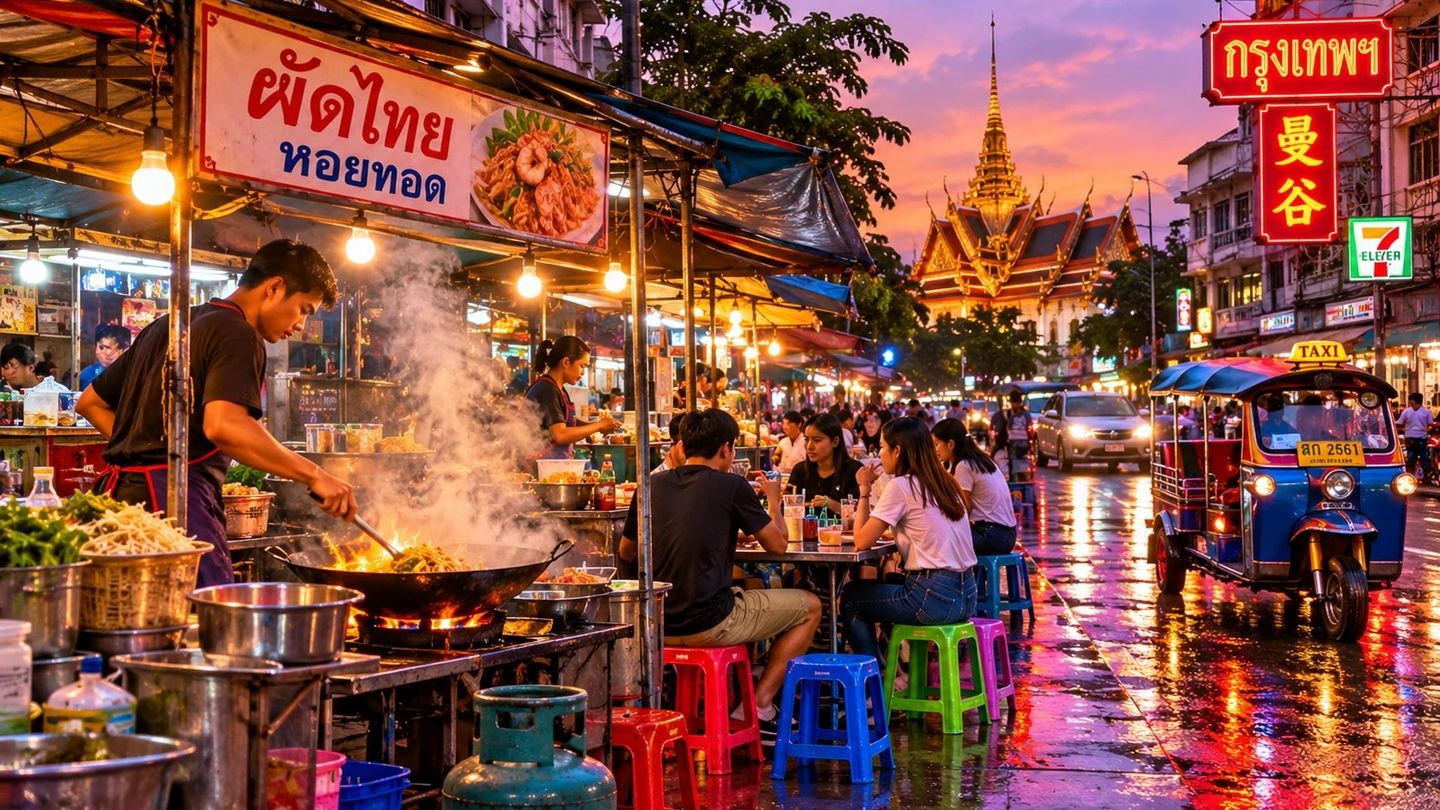
AI-generated image
At a glance
- Shoestring
- ฿1,200–1,800 per day
- Mid-range
- ฿2,500–4,500 per day
- Comfort
- ฿6,000+ per day
- Biggest variable
- Where you sleep, and island ferries
- Visa-free stay
- 30 days for many nationalities (from Sept 2026)
- Cheapest months
- May–Oct (rainy season)
In this guide
- 01 Daily budget at a glance
- 02 Accommodation
- 03 Food and drink
- 04 Getting around
- 05 Activities and entry fees
- 06 A sample 7-day budget (mid-range)
- 07 Hidden costs to plan for
- 08 Entry rules (check before you fly)
- 09 When to go for the best value
- 10 Five ways to make your baht go further
- 11 Frequently asked questions
The short answer
A week in Thailand costs roughly ฿8,500–12,500 per person on a shoestring, ฿17,500–31,500 mid-range and ฿42,000+ for a comfortable trip, not counting international flights. Food and local transport are cheap almost everywhere. What really moves your total is where you sleep and whether you head to the islands, where rooms and ferries cost more.
Thailand has a reputation for being cheap, and in many ways it still is. A bowl of noodle soup from a street stall costs less than a coffee at home, and the Bangkok skytrain will take you across the city for the price of a snack.
But “cheap” can be misleading. A week split between Bangkok and a popular island in high season can cost three times as much as a week in Chiang Mai in October. This guide breaks down what each part of a trip really costs, so you can build a budget that fits your style.
How to read our estimates: all figures are in Thai baht (฿), are per person, and reflect prices in late 2026. Accommodation assumes two people sharing a room. Prices vary with season, location and exchange rates, so convert at the current rate before you go.
Daily budget at a glance
Budget estimate: Thai baht (THB), per person per day, late 2026 estimates
Includes: accommodation (sharing a double), three meals, local transport and one paid activity. Excludes international flights and travel insurance.
| Category | Amount |
|---|---|
| Shoestring: hostels, street food, public transport | ฿1,200–1,800 |
| Mid-range: 3-star hotels, mix of street food and restaurants, Grab rides | ฿2,500–4,500 |
| Comfort: boutique hotels and resorts, restaurants, private transfers | ฿6,000+ |
RestMania estimates for planning only. Islands and December–February cost more; May–October is often cheaper.
Accommodation
Accommodation is the biggest single cost, and the one with the widest range.
- Hostels: dorm beds in Bangkok, Chiang Mai and the islands are usually the cheapest option. Private rooms in hostels are a good middle ground for couples.
- Mid-range hotels: clean, comfortable 3-star hotels with a pool are easy to find in cities. Expect to pay more for the same standard on islands like Koh Samui or Phuket.
- Resorts: Thailand has some of the best-value luxury hotels in the world, especially in Bangkok, where international five-star brands often cost far less than in Europe or the US.
Tip: in Bangkok, staying near a BTS Skytrain or MRT station saves both time and taxi fares. Sukhumvit, Silom and Ari are convenient bases.
Food and drink
Eating well is one of the great pleasures of Thailand, and it doesn’t have to be expensive.
- Street food and markets: most single dishes such as pad kra pao, khao man gai and noodle soups cost from around ฿50–100.
- Local restaurants: a meal in a casual sit-down restaurant typically costs a few hundred baht.
- International restaurants and rooftop bars: prices approach those at home. Cocktails at Bangkok’s famous rooftop bars are a splurge.
- Drinks: alcohol is heavily taxed, so beer and wine add up quickly. Bottled water and fruit shakes are cheap.
Getting around
In Bangkok
- BTS Skytrain: fares depend on distance, typically around ฿17–65 a ride. Many stations accept contactless bank cards.
- Airport Rail Link: from Suvarnabhumi Airport to the city costs about ฿15–45 and takes around 30 minutes.
- Grab and Bolt: ride-hailing apps show the fare upfront and avoid haggling. Traffic can make road travel very slow at rush hour.
- River boats: the Chao Phraya Express Boat is a cheap and scenic way to reach the Grand Palace and Old Town.
Between cities and islands
- Domestic flights: budget airlines link Bangkok with Chiang Mai, Phuket, Krabi and Koh Samui. Booked a few weeks ahead, one-way fares often start around ฿1,000–2,500 before baggage fees.
- Trains: the overnight sleeper from Bangkok to Chiang Mai is slow but memorable, and saves a night’s accommodation.
- Ferries and speedboats: island transfers are where budgets often slip. Combined bus-and-boat tickets are cheapest, while speedboats and private longtails cost much more.
Activities and entry fees
- The Grand Palace and Wat Phra Kaew: ฿500 for foreign visitors. Dress modestly, with shoulders and knees covered.
- Temples: many are free or charge a small fee. Wat Pho and Wat Arun charge foreign visitors a modest entrance fee.
- National and marine parks: foreign visitors pay higher entry fees than Thai nationals, and many island day trips add a park fee on top of the tour price.
- Cooking classes, diving and elephant sanctuaries: often the most expensive day of the trip. Choose ethical sanctuaries that don’t offer riding or shows.
A sample 7-day budget (mid-range)
This route spends three nights in Bangkok and four in Chiang Mai, a good-value combination with plenty to do.
| Item | Estimate (per person) |
|---|---|
| 6 nights’ accommodation (3-star, sharing) | ฿6,000–12,000 |
| Food and drink, 7 days | ฿4,500–8,000 |
| Bangkok transport (BTS, MRT, Grab, boats) | ฿800–1,500 |
| Flight Bangkok → Chiang Mai (one way, booked ahead) | ฿1,000–2,500 |
| Activities (Grand Palace, temples, cooking class, day trip) | ฿3,000–6,000 |
| eSIM or local SIM | ฿300–600 |
| Estimated total | ฿15,600–30,600 |
Swap Chiang Mai for an island such as Koh Lanta and you should add more for ferries and accommodation. Our guide to affordable tropical islands compares the best-value options.
Hidden costs to plan for
- ATM fees: Thai banks typically charge foreign cards a flat fee on every withdrawal, so fewer, larger withdrawals work out cheaper.
- Dynamic currency conversion: when a card machine offers to charge you in your home currency, decline and pay in baht.
- Peak-season surcharges: many hotels add a supplement over Christmas, New Year and Chinese New Year.
- Travel insurance: essential, especially if you plan to ride a scooter. Many policies won’t cover you without a valid motorcycle licence.
Entry rules (check before you fly)
- Visa-free stays: many nationalities, including US, UK, Canadian, Australian and EU citizens, can enter Thailand visa-free for tourism. Since 15 September 2026 the visa-free stay has been reported as 30 days, down from 60, and can be extended once at an immigration office.
- Thailand Digital Arrival Card (TDAC): all foreign visitors must complete this free online form within the three days before arrival. Use only the official TDAC website. Some copycat sites charge a fee.
- Tourist entry fee: a tourism fee for foreign visitors has been discussed for several years but was not being collected as of November 2026.
Rules change often. Confirm them with the Thai Immigration Bureau or your nearest Thai embassy before booking.
When to go for the best value
- November–February: cool, dry and beautiful, and also the busiest and most expensive time.
- March–May: hot season. Prices start to drop, but Bangkok can be very hot.
- June–October: rainy season, with the best hotel deals. Showers are often short, but some islands on the Andaman coast become quieter and seas can be rough.
Five ways to make your baht go further
- Eat where locals eat. Markets and food courts in malls are excellent and cheap.
- Base yourself in Chiang Mai for a few days. It’s one of the best-value cities in Asia.
- Book domestic flights early and travel with carry-on only to avoid baggage fees.
- Travel in shoulder season (late April–June or September–October).
- Stay longer in fewer places. Weekly rates and fewer transfers save money and energy.
Still deciding where to go this winter? See our best countries to visit in December, and pack smarter with our international packing checklist.
Frequently asked questions
How much money do I need for a week in Thailand?
Excluding international flights, plan on roughly ฿8,500–12,500 per person for a week on a shoestring, ฿17,500–31,500 mid-range, and ฿42,000 or more for a comfortable trip. These are RestMania estimates for late 2026, based on one person sharing a double room. Islands and peak season cost more.
Is Thailand still cheap in 2026?
Food, local transport and simple accommodation are still very good value, especially in Bangkok, Chiang Mai and the north. Popular islands such as Phuket, Koh Samui and Koh Phi Phi cost noticeably more, particularly from December to February.
Do I need a visa for Thailand?
Many nationalities, including US, UK, Canadian, Australian and EU citizens, can visit Thailand visa-free for tourism. Since September 2026 the visa-free stay has been reported as 30 days, extendable once in Thailand. All visitors must complete the free Thailand Digital Arrival Card (TDAC) online before arrival. Always confirm current rules with the Thai Immigration Bureau or your nearest Thai embassy.
Should I bring cash or use cards in Thailand?
Bring a mix. Cards are widely accepted in hotels, malls and chain restaurants, but street food, markets, songthaews (shared pick-up taxis) and small guesthouses are mostly cash. Thai ATMs typically charge foreign cards a fixed fee per withdrawal, so take out larger amounts less often.